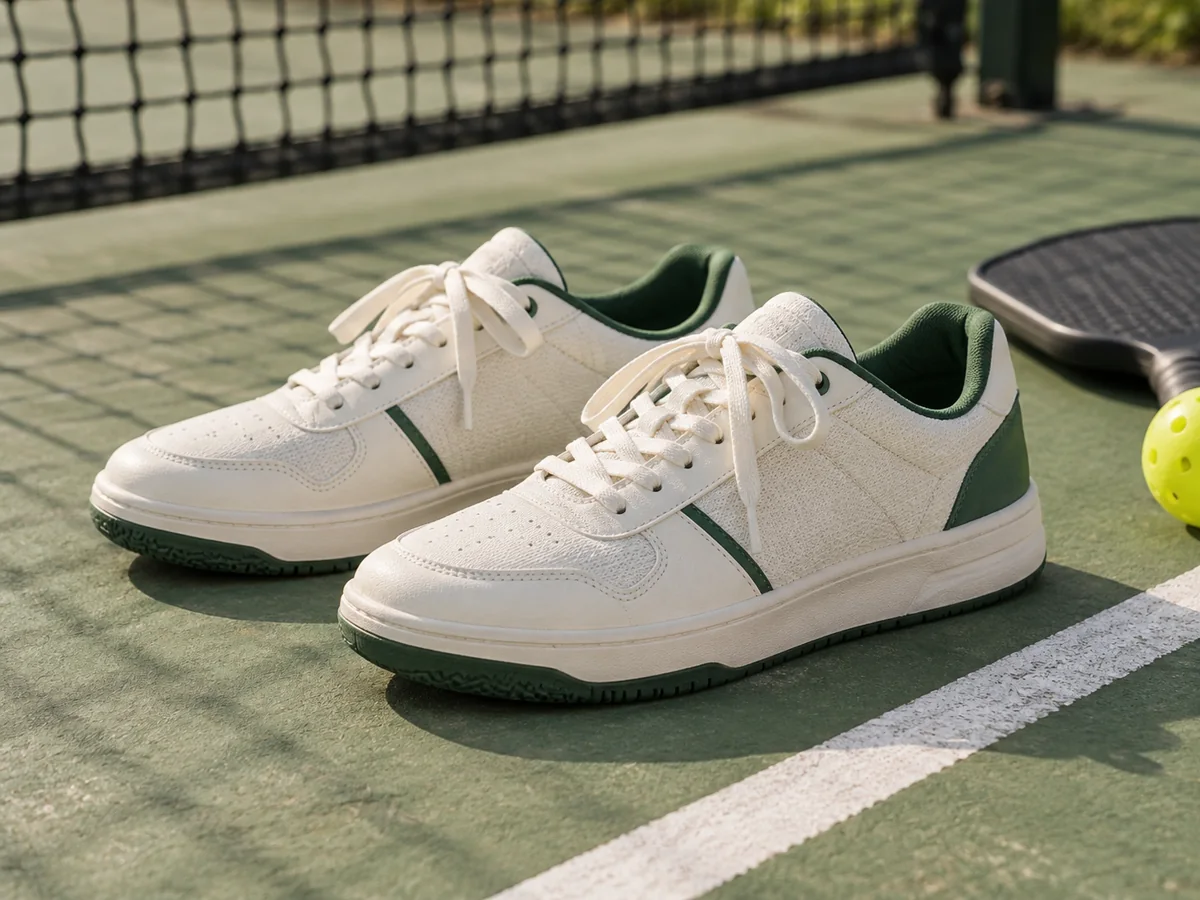
A great court shoe should be easy to forget. Your heel stays put. Your toes have room. When you move to the side, your foot does not spill over the edge.
That makes fit a better starting point than a long list of shoe technology. I would try these two models side by side. One puts a strong focus on support around the heel. The other is a simpler, lower-cost way into a purpose-built pickleball shoe.
Two shoes worth trying on
| Shoe | Best reason to try it |
|---|---|
| ASICS GEL-RESOLUTION X | Structure for quick side steps and stops |
| K-Swiss Express Light Pickleball 2 | A lower-cost court shoe with a revised upper |
1. ASICS GEL-RESOLUTION X: my first try for support
The GEL-RESOLUTION X is the first pair I would try if secure side-to-side movement tops the list. It is a tennis shoe, but that court-focused design also makes it worth a look for pickleball on a matching surface.
ASICS explains in its model launch details that the support structure wraps from the outside of the foot around the heel. It also places foam under the heel and lets you adjust the hold through the laces.
I like those priorities. Still, more structure is only helpful if it fits. Walk, bend, and take gentle side steps before you commit. A shoe that rubs or lets your heel lift is the wrong choice, even if the design sounds ideal.
Best for: players who want a more supported feel. The tradeoff: fit needs a careful check; do not buy by your old size alone.
2. K-Swiss Express Light Pickleball 2: the value try-on
The Express Light Pickleball 2 is my lower-cost alternative. K-Swiss gives this version a revised synthetic upper and reinforced high-wear areas. It uses a molded rubber outsole and a foam midsole.
A verified owner on the product page praises the fit and the way the tongue and laces work together. That is a useful detail, but it is one report. It does not settle how the shoe will fit your foot or hold up over a full season.
I would try it with the socks you wear to play. Pay close attention to the top of your foot when you bend low. Check other colors or widths if your size is missing; stock varies by version.
Best for: a practical court shoe at a lower price. The tradeoff: long-term owner evidence for this newer version is still limited.
Be careful with reviews of the older shoe
A model name can hide a big change. In this Express Light 2 discussion, the thread's author likes the nimble feel of the original shoe but asks what changed in the new one. That is praise for the old model, not a wear test of the new pair.
The lesson applies across brands. Check the number at the end of the name, the width, and the outsole. A review of a clay-court version may not tell you much about grip on your local hard court. A men's standard-width review may not answer a woman's fit question.
The five-minute fit check
Try both shoes on both feet. Feet do not always match. Use the same socks and any inserts you normally play in. Start with the brand's foot-measuring guide, then let the fit decide.
- Stand up. Your toes should have room to spread without pressing into the front.
- Walk and rise onto your toes. Watch for heel lift or rubbing.
- Bend into a low ready stance. Check for pressure across the top of your foot.
- Take a few gentle side steps on a clean surface. Your foot should stay within the shoe.
- Keep them on for several minutes. A small pressure point can become the only thing you notice.
I would not size down just to stop heel slip. That can trade one problem for squeezed toes. Try the laces, another width, or another shape. Check the return terms before any outdoor test.
Match the sole to the place you play
“Indoor” can mean a wood gym floor or a covered hard court. Those are not the same surface. Ask the venue what soles it allows and whether it requires non-marking shoes.
For outdoor hard courts, look for a court outsole suited to that surface. Keep an indoor pair clean if you move between venues. Dust and grit from the car park do not belong on the gym floor.
I would keep road-running shoes for runs. Pickleball asks you to stop, pivot, and move sideways in a tight space. If you run as well, our winter gear guide covers layers for the other half of your week.
When to replace a pair
Look at the sole, not the calendar. Check the spots under the ball of the foot and along the edges. Uneven wear, smooth patches, split seams, or a foot that shifts inside the shoe are reasons to take a closer look.
Do not expect one number of playing hours to fit everyone. Court texture, body size, movement, and how often you play all change wear. If a shoe hurts, stop using it for play and address the cause rather than trying to push through.
Once your feet feel settled, compare paddles by the shots you want to improve. A new paddle is more fun when you can get to the ball in balance.
My first fitting would be the GEL-RESOLUTION X. I would keep the Express Light Pickleball 2 beside it as the value choice. The winner is the pair that holds your foot well without making you think about your feet.